
The trip to Quedlinburg was a paid collaboration with the German Tourist Board
“You have reached your final destination”. The safe voice of the GPS has guided me through narrow, one-way cobbled streets and it is only when I turn off the car engine that I dare to look around. The grandeur of Germany hits me again – I’ve arrived in yet another sugary, historic, vibrant German city I didn’t know. Who ever heard of Quedlinburg?
Quedlinburg and the Harz region
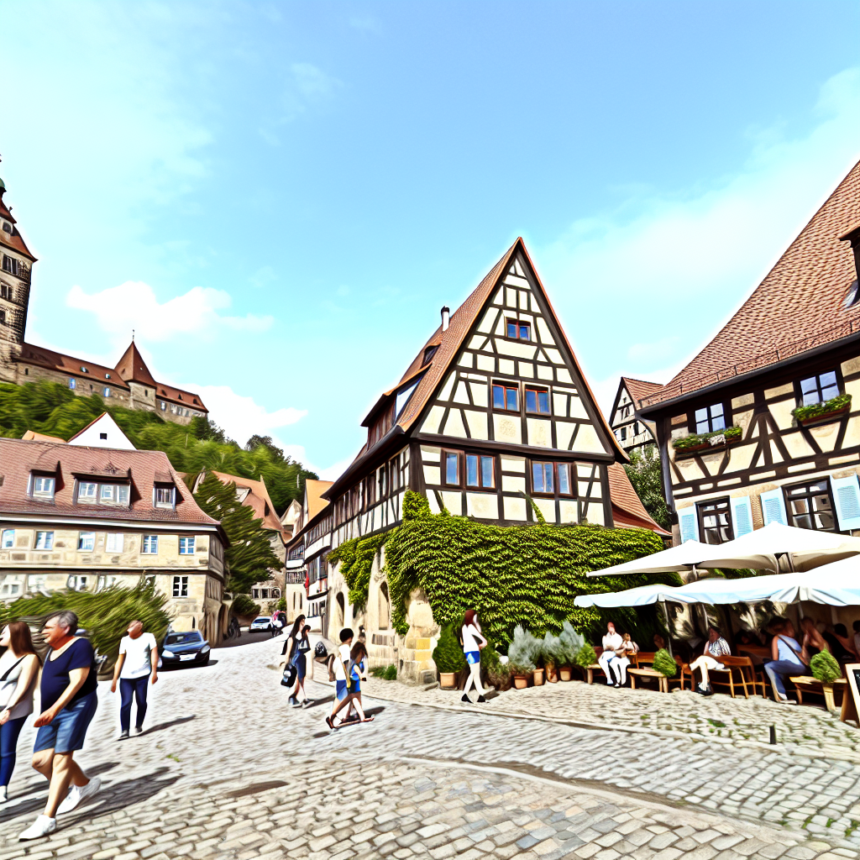
Despite the city’s unknown name, at least to me and Google’s Swedish search results, it is in Quedlinburg that Germany’s history began. The country’s first king was crowned here more than a thousand years ago. The city is located in the Harz region in the state of Saxony-Anhalt, approximately 2.5 hours by car from Berlin. The medieval city is filled with half-timbered houses – over two thousand of them – and is today classified as a UNESCO World Heritage Site. In addition, Quedlinburg was ruled by women for over eight hundred years and today is part of a group that wants to pay tribute to strong women.
Me and Lisa from the travel blog Let’s go explore are discovering the city and the region for a few days!
8 things to do in Quedlinburg and the Harz
1. Get a historical tour of Quedlinburg
The best thing I know is to discover a new city! Ideally, I want to go for a lap straight away to get an overview, but since I really don’t like having to have my nose in Google Maps at the same time, I tend to get lost a lot. To avoid that, a guide, or audio guide, is perfect. Lisa and I each rent an audio guide from the tourist information in the middle of the square. It takes us past the cutest alleys, oldest houses, prettiest squares and best views.
2. Shop for local crafts in Quartier 7
An area of Quedlinburg that is filled with local crafts is Quartier 7. Here you can find silversmiths, potters, glassblowers, felt makers, fashion designers and origami artists. Chill out among beautiful hand-blown glass and well-folded paper artwork. Quedlinburg has a total of over a hundred stores for those with a shopping appetite.
3. Ride a steam train in the Harz National Park
Take the train along the legendary Brockenbahn that enters the Harz National Park. The railway winds its way up to the park’s highest peak 1142 meters above sea level. Once at the Brockenbahnhof there is a museum and a restaurant with a panoramic view of the national park. Unfortunately, we’ve had the first snowstorm of the year and the planned hike through the national park has to be replaced by another train journey through the clouds.
4. Walk on Germany’s longest suspension bridge – or ride a zipline
Half an hour by car from Quedlinburg lies – or hangs – Germany’s longest suspension bridge Titan RT. The bridge is 483 meters long and hangs 100 meters above the water. We walk away on the suspension bridge and then take the bridge on top of the dam on the way back. But the brave book in on the Harzdrenalin, a zipline course that takes you flying on your stomach down through the valley. Even a person with a fear of heights like me gets a bit of an urge to fly. The bungee jump from the small ledge in the middle of the bridge, however, I am over.
5. Stroll in the neighboring town of Wernigerode
Half an hour’s drive from Quedlinburg is another sweet German gem: Wernigerode. A city that has existed for almost 800 years and is home to yet another impressive collection of half-timbered houses. The city’s fairytale castle stands on a cliff and stands guard, and if you like trains, you jump on the steam train that chugs along the 140 kilometer Harzer Schmalspurbahnen narrow-gauge railway. We stroll the alleys, see the smallest half-timbered house, crave the pastries at Café Wien and eat an Italian vegan dinner at Casa Vita.
6. Visit a ruin bar and a wine bar
You don’t have to go far to find a bar or a cute cafe in Quedlinburg. A tip is the ruin bar Ruinenromantik, located at the Kornmarkt square. They have a strong focus on using local products and organic coffee. Here you drink and eat partially under the open sky in the ruins of a 16th-century house that burned down in the early 2000s. Another tip is Prinz Heinrich, which serves wines from its own vineyard in the Harz. Their outdoor seating looks cozy for a sunnier day and the bruschetta with butter-fried chanterelles is delicious.
7. Eat German at Brauhaus Lüdde
For almost 150 years, Brauhaus Lüdde has brewed beer in the old stone house in Quedlinburg. Today, the brewery houses a restaurant that serves German dishes and locally produced beer among copper vessels and grain sacks. Cozy atmosphere that should be booked in advance as the restaurant is one of the most popular in town. We try one of their specialties: beer drink with prosecco and strawberry syrup and are surprised at how quickly it actually goes down. Tips in other words!
8. Stay at Hotel Zum Bär in Quedlinburg
Our base during the stay in the Harz is at the Hotel Zum Bär in Quedlinburg. With an entrance facing the town’s main square, Marktplatz, it’s hard to live more centrally than this. Hotel Zum Bär is a family hotel that has been run for 250 years and the hotel atmosphere is in the wallpaper. The hotel also has a restaurant where we are served hearty German dishes with a view of the square. In addition, I manage to hold a 3-hour long video lecture via Zoom, which should be seen as a very good rating for the hotel’s wifi quality (something that can generally vary greatly in Germany).
Tip: Get a “HarzCard”
The Harz region has a card (HarzCard) that gives you free entry to over 150 attractions. The card costs SEK 320 for 2 days or SEK 610 for 4 days and can, among other things, be ordered online. We used our Harz card to ride along the Brockenbahn, enter the Brockenhaus museum, and rent the audio guide in Quedlinburg.
More German cities I wrote about
Do you have a German small-town favorite of your own?
The trip was a paid collaboration with the German Tourist Board. The words, opinions and pictures are, as always here at Fantasiresor, my own.