
The minivan turns off the highway and into the darkness on a rust-red sand road. The driver pulls past a shed with a flashing neon sign on the roof and eight paper cups containing something very dark and steaming are brought in through the car door. Arabic hits from the kiosk’s stereo mix with the strong scent of cardamom and I take a sip of the Jordanian coffee.
With the coffee, my veins are also filled with a desire to discover, the sensory buds slowly unfurl after months of being dry from the outside world and missing experiencing something different. Something foreign. But still so at home. Ten minutes from Amman airport and I’m already in love.
Itinerary: Jordan day by day
- Day 1 and 2: Amman
- Day 3: Jerash and the Dead Sea
- Day 4: Petra
- Day 5: Wadi Rum
- Day 6: Aqaba
- Day 7: Amman
The trip is a press trip, but opinions, words and pictures are, as always, my own.
Things to do in Jordan – 9 tips
1. Amman – the white capital
Amman’s whitewashed house facades change to yellow-pink during the morning blush and turn to blue-purple shades towards evening. The buildings climb up the seven hills that make up the Jordanian capital. Here, bustling markets alternate with prayer calls, murals with ancient remains, and the smell of falafel with exhaust fumes. Impressions abound in Amman.
We visit the city’s biggest tourist attraction, the citadel, which offers a history lesson from the Bronze Age through the Roman Empire and the Byzantine Empire onwards. Tastes the best falafel in town at Hashem, peeks into the museum apartment The Duke’s Diwan, and browses among probably thirty varieties of fresh dates at the food market.
There is fasting when we land in Jordan, which means that many restaurants are closed – at least for the sake of sight. However, it soon turns out that it is usually enough for our guide to knock on the door and suddenly we are sitting at the table with the meze dishes arriving on a conveyor belt. For those who fast, the fast is broken after sunset with a date that prepares the stomach for the first meal of the evening, iftar.
Read more travel articles about big cities
2. Jerash – the Pompeii of the East
On the way out of Amman we pass Baqa’a, a refugee camp for Palestinian refugees that has existed since 1968 but is now permanent. We drive on highway 35, also called “the king’s highway”, in the direction of Syria. Here in the Jordan Valley, you can hike the 65-mile-long Jordan Trail, a trail that boasts Jesus, Moses and Muhammad as reference objects. The area is also known for both its wine and its olive oil, which is said to be the finest in the country.
But our goal is the archaeological site Jerash, also called “Pompeii of the east” – Pompeii of the East. Jerash is the oldest surviving Roman city after Rome. A place that has been inhabited for thousands of years and that offers many stories for those interested in history. Here we walk around for a few hours and feel the wings of history nibbling on the hairs on the back of our necks.
3. Dead Sea – a low-level highlight
Covering our ears, we finally reach the hotel by the Dead Sea – the lowest point on earth, 422 meters below sea level. Just in time for sunset, we change into bathrobes and slippers to run down to the beach. The hotel has its own small strip of beach which is basically empty of people, it feels incredibly luxurious to be alone with only the Dead Sea sparkling in front.
The black mud is optional but I smear on a layer before carefully stepping out into the 33.7 percent salt water. The feeling of just laying down and floating completely effortlessly is unexpected. So quiet and easy. At the same time, the sun is setting behind the blue-tinted Israeli mountains on the horizon. It is weightless and tone deaf, literally. A memory I save carefully there in the memory bank.
We then eat dinner on a teak terrace under the stars at Beit Sweimeh, a restaurant run by a women’s cooperative. It is again the delicate meze dishes that I never seem to tire of; hummus, tabbouleh, baba ganush, pita bread.
This roof terrace reminds me of when I was a child and we would gather on the roof at dusk to break the fast together. All the neighbors came to us and we sat together on the floor and ate and told each other stories under the starry sky.
Our guide Ra’ed
Read also: The Aral Sea – a journey on the bottom to the lake that disappeared
4. Biblical road trip
Driving through Jordan is like a trip through the Old Testament. Ra’ed is busy keeping us updated on all the holy sites we pass. “You know the story of when…” he says, turning around in the minivan just as hopefully every time. Given his own Muslim faith, he clearly expected a greater response. Instead, he gets to keep updating us on the details.
We stop at Jesus’ baptism site by the Jordan River and at Mount Nebo where Moses died. Despite my biblical ignorance, it is impossible to get away from the awesome feeling of stepping into the stories of the Bible purely physically. The power of storytelling is striking. For those who love religion, Jordan should be a must.
5. Petra – the wonder and world heritage
Of all the things to do in Jordan, the most common to visit is the World Heritage Site of Petra. The ancient city, which is largely carved out of the rust-red sandstone, offers a loud “omg!”. The city had its heyday around 2000 years ago, but just north of the city, remains from 7000 BC have recently been found.
We arrive in Petra already in the evening and have time to experience “Petra by night”, an experience where the entire area is filled with lighted lanterns and music. The hike on the bottom of the gorge into the town itself takes about half an hour and is a magical experience in itself. The cool, red rocks form beautiful backdrops along the road. Then it gradually towers like a crescendo in a symphony: The Treasury – Petra’s most famous building by far.
The next morning we continue further behind the Treasury and there are a total of around 800 buildings to visit – from royal tombs and columns, to temples and amphitheatres.
6. Wadi Rum – Bedouins and desert glamping
Surrounded by the red desert sand, we live in the middle of the Wadi Rum desert. The rooms at Hasan Zawaideh Camp consist of igloo-like tents with panoramic views of the dunes. The hotel is newly opened and has some childhood illnesses, but there are many options for those who want to sleep here. If you would rather live more comfortably in real hotel rooms, you can choose one of the options at the base camp itself.
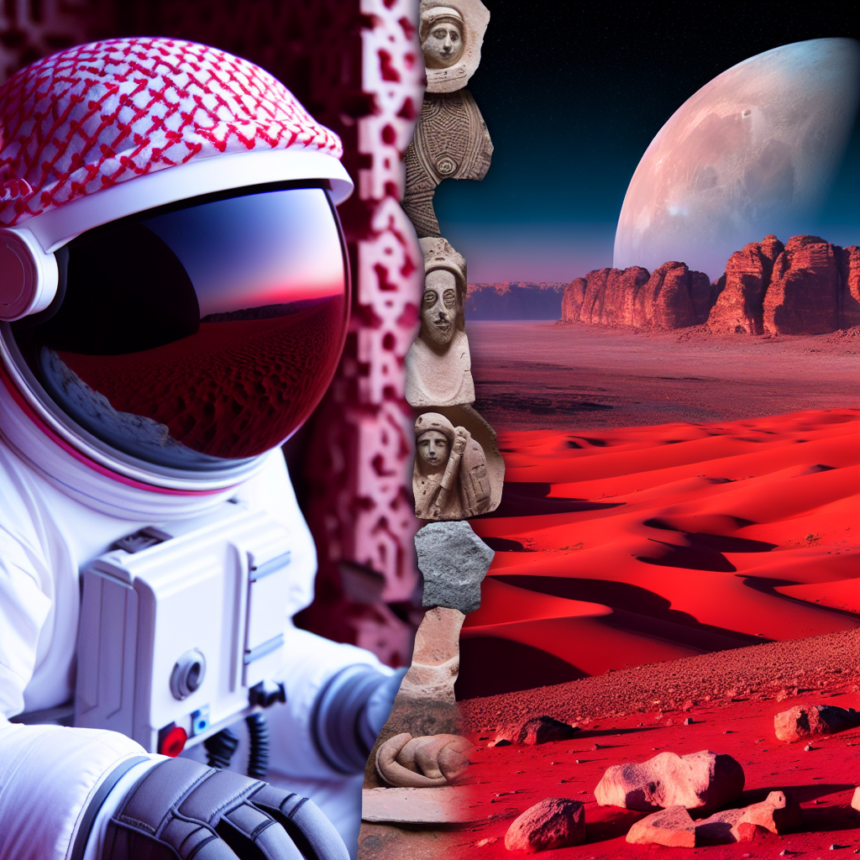
At sunset we head out on a jeep safari across the dunes. It’s cold but beautiful. The grains of sand caress in the wind that veils the ground and the red color becomes even darker in the sunset. Not entirely unexpectedly, Wadi Rum has acted as the Red Planet in films such as Red Planet, The Martian and The Last Days on Mars.
We stop at a Bedouin tent to drink tea. On the floor sits a Bedouin playing his rababah, a kind of stringed instrument made of sheepskin and horsehair. Before we crawl into our own tents, we are treated to a Jordanian barbeque by the hosts. Falling asleep with a sandy fairytale world outside the door.
7. Dromedary riding – like a trader in Wadi Rum
The next morning it’s time for what I longed for the most: riding dromedaries in the Jordanian desert of Wadi Rum. I have ridden dromedaries and camels before in both Gran Canaria and Mongolia, but it is extra powerful to do it with real Bedouins. I pretend I’m a traveling salesman sneaking across the sands heading east with my colorful silks.
Tip: video search on “camel tongue” to see something crazy they do with their tongue.
9. Aqaba – snorkeling and sun tourism
People go to Aqaba to sunbathe, swim, snorkel and eat meze. The city is adjacent to the small strip of Red Sea that Jordan borders. Charter tourism has long gone here and unlike, for example, Petra and Wadi Rum where you will hardly find a restaurant that serves alcohol, the majority of restaurants in Aqaba do. In the evening, the guide takes us to one of his local favorites, Shinawi restaurant.
The Red Sea is famous for its diving and snorkelling and on a good day you can see up to twenty metres. Here you can see thousands of year-old corals, Find Nemo fish, dolphins, sea turtles, blue sharks and whale sharks. Or take a trip over to the neighboring Israeli city of Eilat. A tip is also to have Aqaba as the base for your Jordan trip and then take day trips to Petra, the Dead Sea and Wadi Rum.
Summary of the Jordan trip
Amman was more urban than I thought (and added more flavor), the Dead Sea more awesome, Petra was bigger and Wadi Rum dreamier. Traveling in Jordan feels safe, the people we meet are friendly and helpful even if the English is not always that good. I come home full of impressions and ready for new adventures – where does it go?
Now I’m curious: have you been to Jordan or are you (were?) perhaps interested in going there?